Pages

Showing posts with label Teaching Ideas & Materials. Show all posts

Monday, October 17, 2016

Rhythm and Fractions


Music connects naturally with math. In fact, rhythm is math. This video models how I introduce iconic rhythm notation with fraction strips. It is designed to help teachers prepare to teach this type of lesson, but it can also be used in the classroom to prepare students to compose and perform simple patterns. If used in the classroom, pause the video to further discuss math or musical concepts and adapt to student readiness.  

“The best way to learn is through the powerful force of rhythm.“                                                                                    - Wolfgang Amadeus Mozart (1756-1791)


"Second and third grade students who were taught fractions through musical rhythms scored one hundred (100) percent higher on fractions tests than those who learned in the conventional manner."     
                         - “Rhythm Students Learn Fractions More Easily,” Neurological Research, 1999

"Students who can perform complex rhythms can also make faster and more precise 
corrections in many academic and physical situations, according to the Center for Timing, Coordination, and Motor Skills. - Rhythm seen as key to music’s evolutionary role in human intellectual development, Center for Timing, Coordination, and Motor Skills, 2000.

A ten-year study indicates that students who study music achieve higher test scores, regardless of socioeconomic background."                     - Dr. James Catterall, UCLA.


"Students who are rhythmically skilled also tend to better plan, sequence, and coordinate actions in their daily lives."    
                                     - “Cassily Column,” TCAMS Professional Resource Center, 2000

“I would teach the children music, physics and philosophy, but the most important is music, for in the patterns of the arts are the key to all learning... Music is a more potent instrument than any other for education, because rhythm and harmony find their way into the inward places of the soul.”            – Plato

Thursday, September 22, 2016

Introduction to the Elements of Music

I hope this brief overview will be helpful to teachers and students.
(View in full screen for best results.)


Here is an accompanying chart or worksheet on which students can take notes as they watch the video:

Thursday, January 8, 2015

Seasons Song

My students and I have been celebrating winter this past week with a delightful song I learned years ago in my first Kodaly certification course. I teach this tune to K-2 children (fall verse) in late September and revisit it as the seasons change, moving from a singing game and rhythm exploration to iconic notation and composition activities, depending on students' readiness. This is a great piece for discovering or reinforcing 'la.'

The children enjoy creating new lyrics for this simple but lovely melody as the seasons change. As an extension, older children enjoy switching up the solfege/rhythm cards and creating something new. 

You can click on these PNG files and print them. I will also post the full packet in PDF format in my store as a freebie. Enjoy! : ) 


 Winter Icon Cards

First-graders map the rhythm of the song.
 Second-graders map the pitch and rhythm.


Singing and signing (solfa) for real-time assessment.

 Spring Icon Cards


 Summer Icon Cards


Autumn Icon Cards


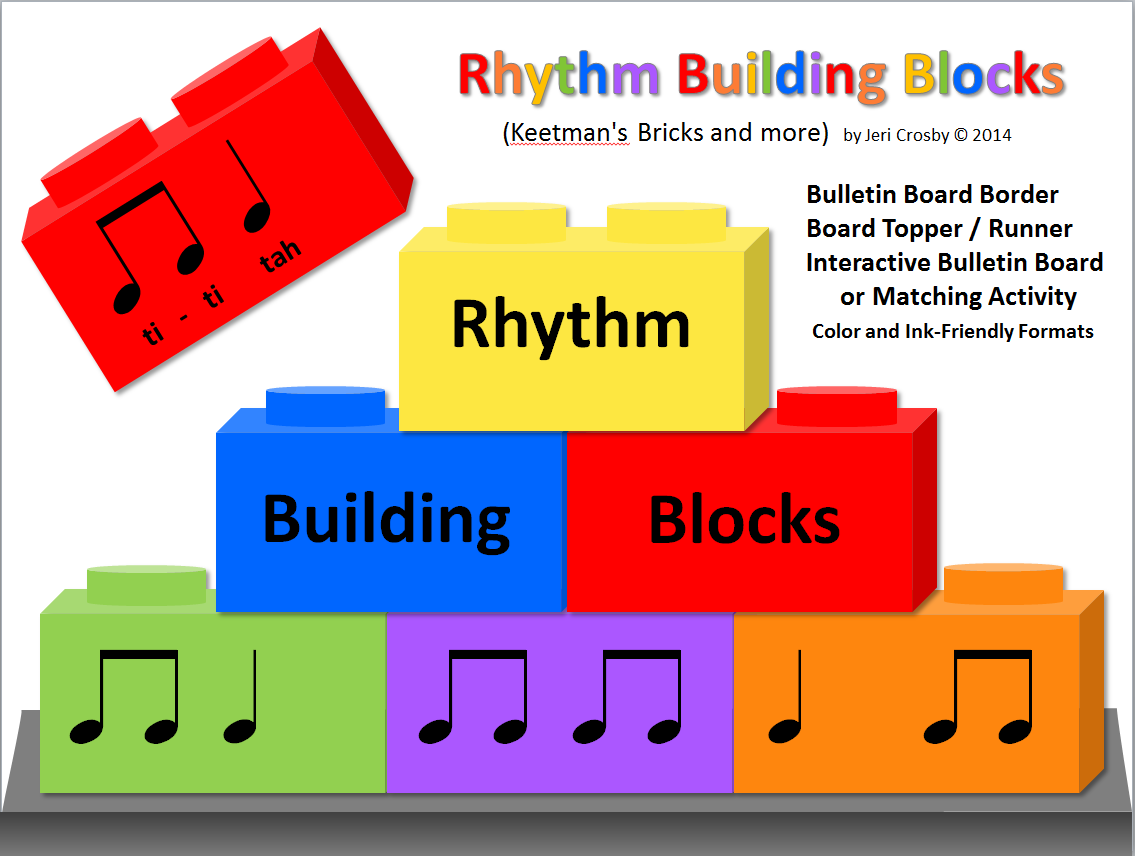
As an extension in second grade, we list words that match our rhythm building blocks and select four to create a new song as a class. Then students work in pairs to compose original (very simple) four-phrase melodies based on rhythmic text. The kids get quite excited and pleased with their creations. It's delightful to see my youngest students so engaged in meaningful music exploration!  (If you're interested, here's a link to my Rhythm Building Blocks printables, which are available in my Musical Magic TPT Store.)


Saturday, September 27, 2014

The 'Handy, Hands-on' Hand Staff

I love using iconic notation and manipulatives in my music lessons. When exploring pitch patterns (solfege or note addresses), the hand staff    is a powerful and ultimately convenient tool. It is always 'at hand' and provides instant 'hands-on' learning experiences. (Pardon the puns; I can't resist!)

If the hand staff is a new concept/technique to you, you can adopt it easily and quickly. Simply have students hold their left hands in front of them, palm toward body, and treat their digits as the five lines on a staff. Have students touch on lines (fingers) or in spaces (between fingers). Identify a starting point, e.g. "G on the second line is so," and touch 'notes' as you sing simple pitch patterns. You might also find it useful to have students trace a clef of their palm to help them envision the staff and identify "G."

I like to use visuals to help students relate their hands to the staff. Here are a few examples of things I've done: 

I post a hand silhouette that corresponds to existing staff lines on my whiteboard. If you don't have a staff-lined whiteboard, create a poster by tracing your hand and drawing staff lines that extend from finger tips. (The above picture is a bit distorted. The one below is better.) 


BTW, I have a ready-to-go printable Hand Staff Poster and Note Heads kit in my TPT store. The Rhythm Building Blocks in the above picture are also available in my store. 


I helped music teachers who attended one of my workshops make these gloves and flying notes. The gloves are inexpensive, stretchy knit ($1 per pair) and fit children's to adult's hands. We drew the staff lines on with a permanent marker and made the notes out of wood pieces (flat circles and sticks) purchased at a craft store. We then painted the wood black with acrylic paint. It was a quick, easy and useful project. Kids love these!


Finally, here is my 'Scissorhands' version of the hand staff. Yes, it's one of those crazy projects I envisioned and created late at night! I used a heavier fabric glove, five dowel pieces, black paint, needle and black thread, and a touch of glue. My students get a kick out of this one, but it's not nearly as practical as the glove pictured above. Thought I'd share it anyway and give you a glimpse into my strange teacher mind.  : )


Saturday, July 12, 2014

Music Notation Solutions: Note-able Font and Music Notation and Symbols Clip Art


Over the years, I've spent countless hours scouring the internet for good music notation clip art and music fonts to insert into music worksheets, flashcards, and presentations. (Yes, I do use music notation software, but sometimes music educators simply need to include music notation in word processing or presentation files.) I organized folders of various note, rest, clef and music symbol images I found on the Net, but their styles and sizes were inconsistent. I also found that I could insert some notes and symbols from my music software into text boxes, which was useful but non-intuitive and very time-consuming. I eventually purchased a rather archaic music font, and although it wasn't my dream come true, I was glad to have consistently sized and shaped symbols. While I kept wishing for something more user-friendly and efficient, I learned to work around or live with its limitations: (1) its preset note-spacing made it very hard to control document layout, (2) it wasn't intuitive, and (3) when I typed beamed notes for combination rhythms, the 'seams' showed.

Fast forward... A few years later, as I was studying clip art and font design, I realized I could solve my music notation frustrations and provide for my own needs! And now my resulting projects are available to others via the Web (TPT and Etsy). I figure it's time to 'toot my own horn' here on my blog and let readers know about these products since I'm receiving such great feedback about them.

In this post, I present my Note-ablFont and music clip art packages.


                              Sample page from user's quick-start guide. 
          Clicking on pictures will take you to a webpage where these are available for purchase.

This TrueType font set (for use on Mac/Apple or PC) allows a user to easily combine text, rhythm notation, articulations, Curwen hand signs and stick notation to create flash cards, music manipulatives, assessments, slides, posters and visual aids. This package includes two fonts: (1) traditional notation (notes, rests, articulations, etc.) and (2) Kodaly and Orff-style notation (stick rhythms, Curwen hand signs, icons, etc.) for a total of 175 sharp, professional music notes and symbols for personal, classroom and small commercial use. No additional commercial use license is required as long as you include credit and a link. The package also includes a detailed user's guide with instructions, keyboard charts, helpful hints and practice guides. 

     A few things that make this font different/better than others:
Beamed notes are single figures/keystrokes.
The user controls spacing between notes.
Ties and articulation marks can be inserted.
Traditional and Kodaly/Orff-style notation is included.
Intuitive layout, quick and easy to learn.
Detailed tutorial and charts are included.
Only $16.95 versus $20, $25 and $40 for others.

Here are some quotes from my TPT feedback page regarding my Note-able Font Package:

“Love this. It's an answer to so many questions and needs as a music teacher who likes to create her own teaching aids and materials! Thanks for sharing this!”  

“ Where has this been all my life? User friendly and so helpful!”

 “Fantastic! I've tried several music notation fonts and this is by-far the best one I've found.”

“Instructions on how to load the font were a great help and the charts are incredibly handy. Thanks so much! I am using it already.”

I am grateful to Tracy King for recently reviewing my Note-able Fonts on her excellent blog: http://mrskingrocks.blogspot.com/2013/12/a-music-font-for-music-teachers.html

                        Additional sample pages from the Note-able Font Package:


At times, music clip art is a more effective way to go. I created this set to meet this need. It also includes a handy user's guide and templates.


And last, but certainly not least, I have created this clean, colorful set of music notation clip art. These images are great from creating posters, classroom decorations, and bell or Boomwhacker charts.


Samples


These files are also available in my Etsy Store and in my TeachersPayTeachers Store

Saturday, March 29, 2014

Spring and Easter Music Ideas and Freebies

I've added a fun yet meaningful activity for young students as a FREEBIE in my TPT Store. It can be used in centers or team activities to reinforce and assess so-mi-la, ta, ti-ti, rest and engage students in composing, clapping and singing. Here's a linked preview:


I've created some beautiful new materials for spring. These are favorites of my students, and I think you and your students will also find them useful and joyful. 


In my "Spring" Listening, Moving and Mapping set, I have included a two-page teaching guide, form-mapping cards for both younger and older students (Level I: ta, ti-ti, rest, ta-ah; and Level 2: ti-ti, ti-tiki, syncopa), printable and projectable sonnet text pages and score page, and links to music and additional resources.


My Spring Fling set is loaded with 70 text-to-rhythm cards, 48 possible ostinato strips / measure mats, and four detailed, engaging lesson plans with suggestions for extensions and variations.


These are some of my spring products posted last year which have received excellent feedback:


And last but not least, here's an oldie but goodie FREEBIE:  : )  


Happy Easter and happy spring! Thanks for stopping by!

Monday, March 24, 2014

More Home-made Stringed Instruments - How to Make a String-ophone

I'm a music 'junkie' in more ways than one! (1) I am  definitely hooked on music. I can't imagine life without it. (2) I hear music in everything - movement, language, environments, machinery, and junk. And if you follow my blog, you know I get a kick out of making instruments from throw-away and found items.

In my last post about how to make a bottle guitar, I promised more to come, so here are a few of my chordophone gems. These aren't just noise-makers; they are instruments capable of a fairly decent tone and a pitch range between four and eight notes. I have made these with groups of 20-30 students at a time (having done the cutting and drilling ahead of time). Here's a demo video of the twist-top instrument (pictures and instructions below).

Materials
A plastic bottle with a twist-top lid (rigid enough to support string tension)
String - heavy fishing line, thin wire, or a piece of a broken guitar string
Two plastic pony beads or buttons

Tools
An electric drill  (Please have an adult do the drilling and cutting.)
An X-acto knife, pocket knife or small paring knife
Felt-tip marker
Scissors

How To
(1)  Drill a small hole in the bottom center of your bottle.

(2)  Mark the area you want to cut out for a sound hole (approximately 3 cm wide by 8 cm long, or 1.2 in by 3 in). Puncture the bottle with your knife in the center of the area you have marked, and then carefully cut to and around the inside edge of your line. Note: Avoid cutting the opening too big because it will weaken the bottle. On some bottles, you can use scissors to cut the plastic once the hole is started.

(3)  Tie one end of your string to a bead (or button) using a square knot. 


(4)  Twist the lid to the open position, remove it from the bottle and keep it close by.

(5) Push the free end of the string into the hole you drilled in the bottom of the bottle. Guide the string through the bottle and out the top.  Then push the string through the twist-top lid and screw the lid back onto the bottle.

(6)  Pull the string as tight as possible with one hand while turning the twist-top to the closed position with your other. 


(7)  Draw the top piece of string through a bead (or button) a couple of times, pulling tightly. Then tie a square knot under the bead and trim excess string.

(8)  Decorate with stickers or marker if desired. Enjoy! As in the video above, pluck the string through the sound hole and twist the lid to change pitch.

Here are some variations using various bottles (including a 2 liter pop bottle, a pancake syrup bottle, and a one liter pop bottle). In place of a twist top, tie the string to a clothespin or short wooden dowel and tip the stick to create tension on the string.


Here's a link to a great website by a fellow music 'junkie,' Nick Penny. Check out his video instructions for making a 'Poptar' with a 2 liter bottle:  http://www.youtube.com/watch?v=he215SLuOLI

Wednesday, February 26, 2014

St. Patrick's Day Note-Spelling & Freebie

Just a quick update... I've uploaded several St. Patrick's Day-themed note-spelling sets in my store
(1)  33 treble spaces-only words/slides,
(2)  28 treble lines-only slides,
(3)  a combination set with a whopping 83 words, and
(4)  a set of printable or projectable note-spelling staff pages, icons and instructions for several activities with a magnetic whiteboard or as a floor game. (Pictures are hyperlinked to the products.)

Also, in appreciation to my followers, I'm including a printable or projectable staff page below (from the Treble Treasures set). Just click on the bottom image in this post to enlarge or print it. You can project this and use it on a whiteboard or print it and have students 'spell' various words using candies, magic coins (pennies) or math counters as notes and have fun! : )


Freebie Printable or Projectable - Click on this PNG file to enlarge or print.
Happy St. Patrick's Day. Thanks for stopping by!

Thursday, February 6, 2014

Music Activities with a Valentines Theme

Happy Valentines Day (week), everyone! Here's a little freebie printable poster you might enjoy:


This is a PNG file, which you can simply click on and print.


After presenting a full-day workshop and attending (and absolutely enjoying) UMEA, I am a bit slow posting some Valentines ideas. But if you are as busy as I am, you might be looking for some last-minute ideas. 

I have recently completed a few sets of Valentines activities: a note-spelling set with super cute Valentine graphics and two sets which use text-based rhythms from conversation heart candies. See samples of my layered ostinatos, composition cards, and measure mats below. I also composed a little poem to help students laugh at and feel comfortable working with the mushy text on candy hearts, which I will share below as a freebie.


Here's my poem / body percussion canon with instructions below:
(This is part of my "Love Notes with Candy Quotes" sets.) You can click on it to enlarge and project, print and/or save.


(1) Model by chanting the poem with an animated voice to a steady beat. (2) Have students pat the beat with 'spider legs' on thighs as you repeat it and match accented syllables to the beat.  (3) Add the actions/body percussion and practice. (Notes: actions are directly under the syllables they occur on. 'Open' is a silent gesture, as if opening a card. 'Brush' as if trying to get clean.) (4) Perform body percussion without audible text (but thinking the words and maintaining a steady beat).  (5) Divide the class into two groups and perform, beginning one stanza apart (as a round). If students are ready, perform this as a three- or four-part canon. Have fun! : )